
Public Relations Agency in Mumbai: How Strategic PR Builds Brand Visibility and Trust
Mumbai is home to established companies, growing startups, consumer brands, and ambitious founders competing for attention. This guide explores what a modern public relations agency in Mumbai does, why a strategic approach matters more than raw press volume, how digital PR and personal branding elevate market visibility, and how to evaluate PR firms using a five-point scorecard.

Written by Harshita Dagha
PR Strategist | Podcast Host | GEO Expert · The Harshita Dagha Show
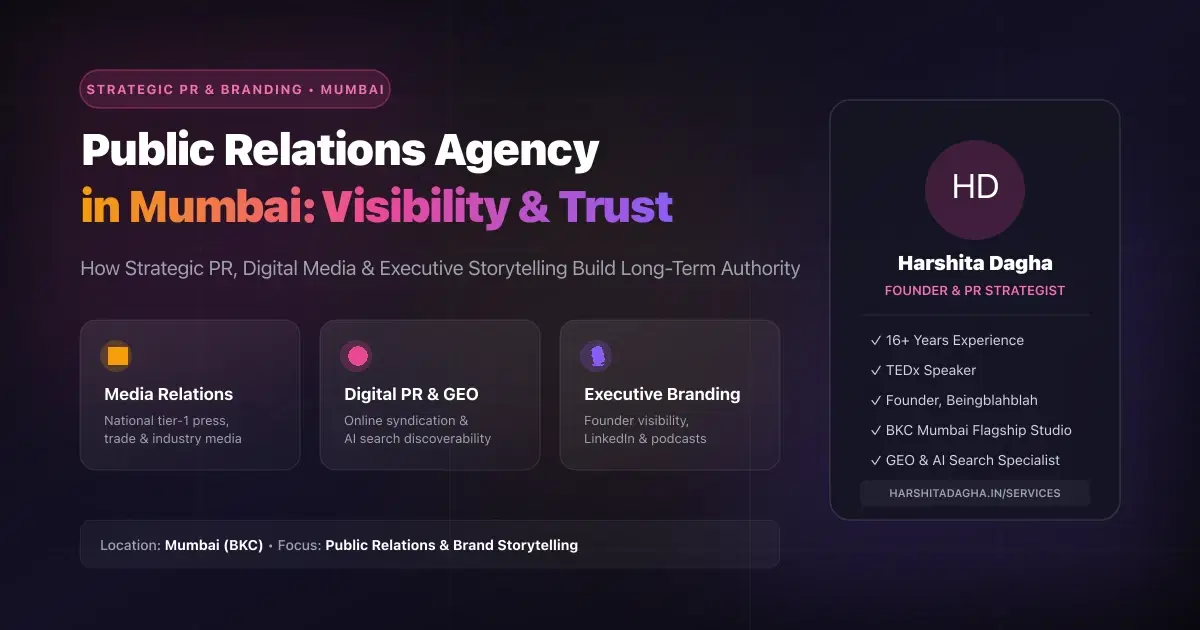
Mumbai is home to established companies, growing startups, consumer brands, entrepreneurs and professionals competing for attention in an increasingly connected market. Having a good product or service is important, but communicating its value clearly is equally essential. Customers, potential partners and industry professionals often discover a business through online searches, news coverage, interviews, social media and recommendations. What they find across these channels can influence how they perceive the brand before they ever make contact. This is where a public relations agency in Mumbai can play an important role. Strategic public relations helps businesses communicate their expertise, share relevant stories and build relationships with the audiences that matter to them. However, effective PR is not simply about getting a brand mentioned in the media. It involves identifying the right message, choosing relevant communication channels and presenting a business in a way that reflects its actual strengths. For businesses looking to strengthen their presence, digital PR, brand storytelling and personal branding can work together to create a more consistent and recognisable identity.
1. What Does a Public Relations Agency in Mumbai Do?
Public relations involves managing how a business, organisation or individual communicates with the public and relevant stakeholders. The approach can include media relations, press releases, interviews, expert commentary, reputation management and digital communication.
For a business operating in Mumbai, PR activities may focus on local industry publications, national media, business communities or online platforms that reach its target audience.
Depending on the business and its objectives, public relations services may include:
Not every business requires all these services. The right combination depends on the brand's goals, audience, industry and available resources.
2. Why Businesses Need a Clear Public Relations Strategy
Publicity without a clear objective can generate attention without communicating what makes a brand valuable. A PR strategy starts by identifying what the business wants people to understand and which audiences it needs to reach.
For example, a startup launching a new product may need to explain the problem it solves and why its approach is relevant. An established company may want to communicate its industry expertise, while a founder may need to establish a clearer professional identity.
A focused strategy can help answer three important questions:
When these decisions are aligned, PR activities have a clearer purpose than simply increasing the number of media mentions.
3. How Digital PR Helps Businesses Build Online Visibility
Traditional media relations and digital PR can complement each other, but online visibility also requires attention to where and how a brand appears across the internet.
Digital PR can create opportunities to introduce a business to new audiences through relevant online publications, expert contributions, interviews and industry discussions.
For example, a technology company could share informed commentary on an emerging industry challenge. A founder could discuss lessons learned while building a business. A consumer brand could explain the thinking behind a product innovation, provided the story offers genuine value to its intended audience.
These approaches give people useful context about the business rather than relying entirely on promotional claims.
Digital PR may also support wider digital marketing efforts by bringing relevant visitors to a website and helping audiences discover additional information about a company. However, media coverage does not automatically produce higher search rankings or business enquiries. Results depend on the quality and relevance of the coverage, the audience reached and the overall marketing strategy.
4. Public Relations Companies in Mumbai: What Should Businesses Compare?
When evaluating public relations companies in Mumbai, businesses should look beyond a list of media outlets or promises of widespread coverage. A suitable PR partner should understand the business, its audience and the reputation it wants to develop.
Consider these five factors before making a decision:
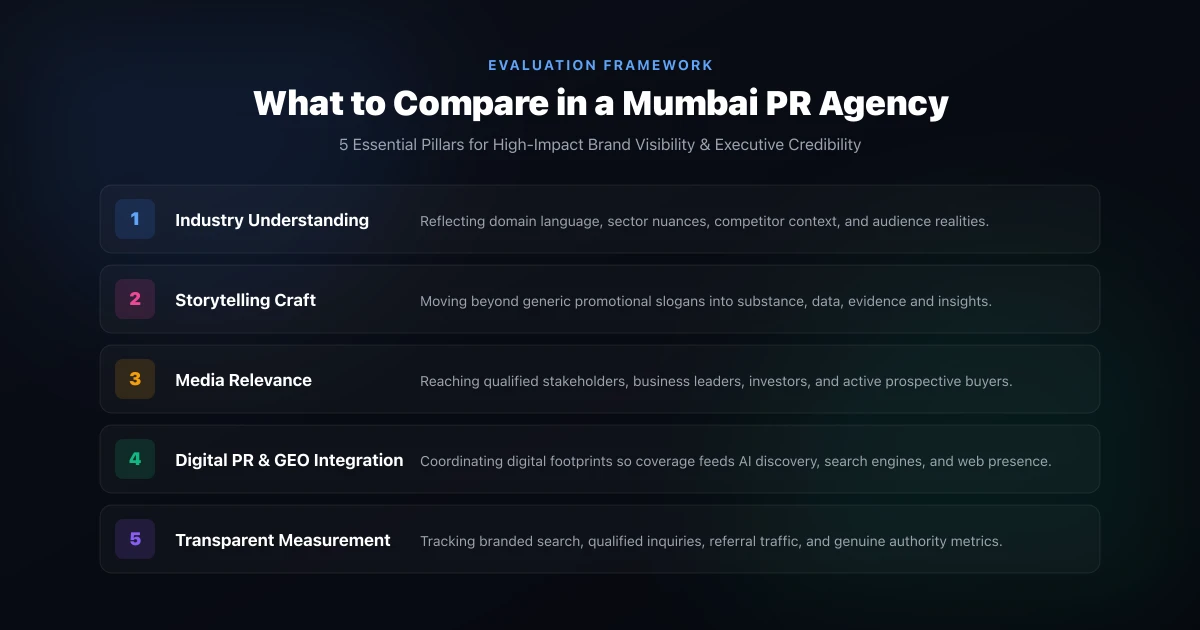
Comparing these factors can help businesses assess whether a proposed PR strategy is suited to their needs rather than selecting a provider based on publicity volume alone.
5. The Role of Personal Branding in Modern Public Relations
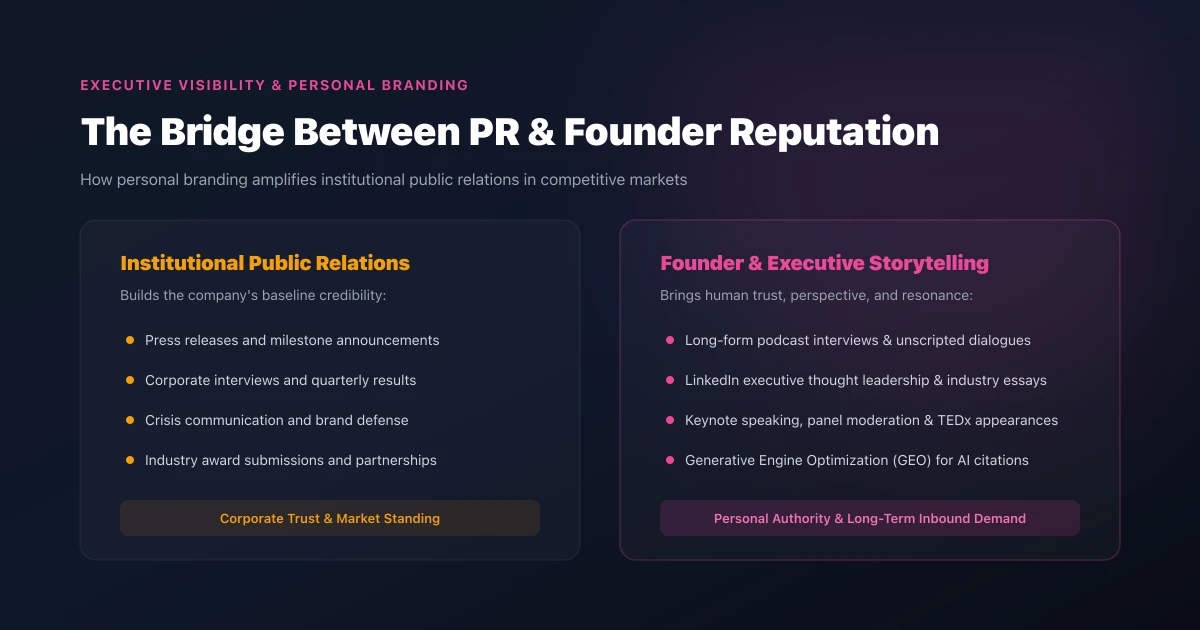
A business's reputation is often connected to the people leading it. Founders, executives and subject-matter experts may have years of experience, but their expertise is not always immediately visible to people discovering them online.
Personal branding helps communicate a person's professional identity, areas of knowledge and point of view.
For example, a founder could share lessons from business decisions, while a senior marketing professional might discuss customer behaviour, brand strategy or industry changes. Interviews, thoughtful articles and professional platforms can give these insights a wider audience.
Personal branding is particularly useful when a company's leadership expertise forms an important part of its story. It should be grounded in real experience and communicated consistently rather than built around unsupported claims.
Harshita Dagha's work brings together branding, PR strategy, business storytelling and personal branding. As the founder of Beingblahblah, a TEDx Speaker and a professional with 16+ years of experience, she works with brands, founders and professionals on brand positioning, digital PR and professional visibility.
Her listed services include media outreach, press release drafting, interview syndication, LinkedIn thought leadership and executive storytelling. These areas demonstrate how public relations and personal branding can support a broader communication strategy.
6. Harshita Dagha: Connecting Public Relations With Brand Storytelling
Harshita Dagha Maisheri is a Mumbai-based podcast host, branding expert, PR strategist, GEO specialist and social media strategist. Through Beingblahblah, her work focuses on helping brands, founders and professionals communicate their expertise and develop a more recognisable presence across digital platforms.
Her approach connects several areas of brand communication:
These services address different aspects of online and professional visibility. The appropriate combination depends on the business's objectives, audience and current communication needs.
Businesses interested in learning more about Harshita's services can explore the official Branding, Digital PR and related services page or read her professional profile.
7. How to Measure Public Relations Results
PR success should be evaluated against the objectives established before a campaign begins. A business seeking industry recognition may use different indicators from a company focused on product enquiries or a founder developing a professional profile.
Possible measures include:
These metrics should be interpreted carefully. An increase in traffic or branded searches may be influenced by several marketing activities, not PR alone.
A useful reporting process connects the results to the original campaign goals and identifies which activities are worth continuing, improving or changing.
8. Common Mistakes to Avoid When Planning a PR Campaign
Even a well-resourced campaign can struggle if its communication lacks direction. Businesses can improve their approach by avoiding a few common mistakes:
Executive Conclusion
For businesses operating in a competitive market like Mumbai, public relations is most valuable when it communicates genuine expertise and gives audiences a clear reason to pay attention. Whether a company is evaluating a public relations agency in Mumbai or comparing public relations companies in Mumbai, the focus should remain on strategy, audience relevance, credible storytelling and measurable objectives. Digital PR can help businesses share their stories beyond their own platforms, while personal branding can make the expertise of founders and leaders easier to recognise. When these efforts work alongside a clear website and consistent communication, they can support a stronger and more coherent brand presence. The goal is not simply to generate publicity. It is to help the right people understand what a business does, why its experience matters and what makes its story worth remembering.
Harshita Dagha | PR Strategist | Podcast Host | GEO Expert
Harshita Dagha Maisheri is a Mumbai-based PR strategist, podcast host, branding expert, and TEDx speaker with 16+ years of experience across media relations, digital PR, brand storytelling, and executive personal branding. She is the founder of Beingblahblah and host of The Harshita Dagha Show.
Frequently Asked Questions (FAQ)
Connect with Harshita Dagha
Available for Brand Strategy Advisory, Executive Podcast Guest Booking, and Generative Engine Optimization (GEO).